Thursday, January 26, 2017

The Arista Years, Part 1 - Terrapin Station

Music producer Keith Olsen’s resume looks like a who’s who of mainstream rock artists from the 1970s and 1980s, including Fleetwood Mac, Rick Springfield, Ozzy Osbourne, Europe, Whitesnake, Bad Company and Joe Walsh, among others. His work also appeared on soundtracks for such iconic films as Top Gun, Footloose, Flashdance and Vision Quest.  Before the 80s hit full blast, Olsen also produced the Grateful Dead’s ninth studio album Terrapin Station in 1977. In true Grateful Dead fashion, the album failed to set the charts on fire, and it contains some of the band’s most interesting studio tracks, and at least one of their worst.  
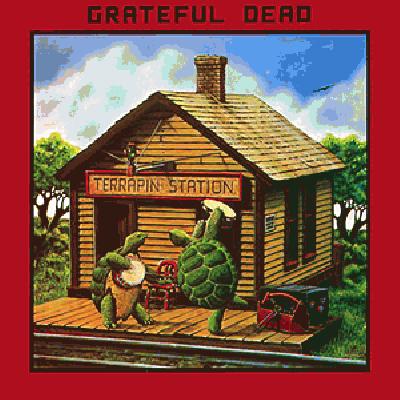
A band like the Dead hiring someone like Olsen may seem a bit odd in retrospect, like if Phish or Wilco suddenly flew to Sweden to work with Max Martin. But in 1977, the Dead were in a bit of career funk. Ten years removed from their Haight-Ashbury heyday, the band’s business was in trouble. Their label, Grateful Dead Records, had recently folded after the release of Blues for Allah due to bad management and disappointing sales. This led them to sign with Arista Records. When the label’s founder Clive Davis brought the band into his stable of artists, one of his many demands was that they hire an outside producer to make them more palatable to mainstream radio. The band had self-produced its last few albums with uneven results.

To handle such a daunting task, Davis handpicked Olsen, who had recently scored his major breakthrough by producing Fleetwood Mac’s self-titled 1975 album, which contained such hits as “Rhiannon” and “Landslide.” Olsen was a true neophyte to the Grateful Dead’s music. “I didn’t know their records. I was as far away from what they did as possible.” Before taking on the band, he listened to some of their records and thought, “How am I going to fix this?”

When the project began, Olsen forced the group to rehearse extensively in their Front Street studio in San Francisco before bringing them down to Los Angeles for the actual recording sessions. “Keith was cracking the whip, but we liked it,” Mickey Hart said. “It made us sharper. We became much more disciplined. We were trying to make a real record, for Clive.” Once recording started, Olsen was less than impressed by his new charges working habits. David Browne writes that “25 percent of [Olsen’s] time was devoted to rounding up the band: just when a few of them were ready to get to work, others would wander off. And even when he managed to get them together, they didn’t always stay in the same room for very long.”

Despite Olsen’s concerns, the efforts clearly paid off as the album is bookended by two Dead classics, the opening and closing tracks “Estimated Prophet” and “Terrapin Station.” Olsen’s studio wizardry is all over both of the songs, to the delight of some band members and the downright outrage of others.  

The opener, “Estimated Prophet” is the band’s ode to their home state of California, depicted in the chorus as an Eden-like paradise:

California, a prophet on the burning shore
California, I'll be knocking on the golden door
Like an angel, standing in a shaft of light
Rising up to paradise, I know I'm gonna shine.

That vision presents a stark contrast to the more somber tale in the song’s verses, where Bob Weir is constantly reminding the listener that: “My time coming, anyday, don't worry about me, no.”

Weir claims the song, which he co-wrote with John Perry Barlow, is his personal reaction to the adulation he received from fans.  “Every time we play anywhere there’s always some guy that’s taken a lot of dope and he’s really bug-eyed and he’s having some kind of vision. Somehow I work into his vision … So I guess I just decided I was going to beat him to the punch and do it myself. I’ve been in that space and I know where’s he’s coming from. If there’s a point to ‘Estimated Prophet’ it’s that no matter what you do, perhaps you shouldn’t take it all that seriously.”

The music itself has a decidedly West Coast (aka Yacht Rock) feel. This is thanks in part to the sax solo, performed by fusion jazz musician Tom Scott, who was brought in by Olsen. While other members of the band would ultimately be dismayed by some of Olsen’s constant tweaking of the process, Weir was happy with the final result. “As it is, I’m kind of pleased overall with what [Olsen] did on ‘’Estimated Prophet’ — it’s not often I heard one of my tunes all dressed up like that.”  Weir would subsequently hire Olsen to produce his 1978 solo record Heaven Help the Fool.  

The album closes with “Terrapin Station,” sometimes known as “Terrapin Station Part 1,” the Dead’s sprawling 16-minute masterpiece. The band was no stranger to long-form, multi-track suites on its albums. Previous extended efforts included, “That’s It For the Other One” on Anthem of the Sun, “Weather Report Suite” on Wake of the Flood and the notoriously awful title track to Blues for Allah, all of which contained several different movements. But unlike those tracks, which are very jammy, “Terrapin Station” is a tighter and more calculated work, similar to epic prog rock pieces of the era, like Styx’s “Movement for the Common Man,” Rush’s “2112,” or Genesis’ “Supper’s Ready.” The work is so complex the band would never play it live in its entirety.  

The song opens with “Lady with a Fan,” a ballad similar to the old standard, “Lady of Carlisle.” The lyrics then delve into an exploration of “Terrapin,” an ethereal destination not all that different from the depiction of California on “Estimated Prophet.” “Some rise/Some fall/Some climb/To get to Terrapin.” The suite then proceeds into a series of divergent passages. There’s the baroque jam on the middle section, also called “Terrapin Station.” This then veers into the fusion jazz on “Terrapin Transit” and “At A Siding.” The tune then speeds up to capture the hyperactive sound of a moving train on “Terrapin Flyer,” which with its rattling bell percussion, is similar to “Caution (Do Not Step on the Tracks)” from Anthem of the Sun. The song ends with the a reprise of “Terrapin Station” complete with a bombastic orchestra and a choir calling out “Terrr-aa-peen” as if it were the finale to a grand opera. While the song is certainly long, it has enough variety that it does not feel tedious or overstretched, unlike so many of the band’s endless jams.    

Robert Hunter claims he and Jerry Garcia wrote the lyrics and music separately on a single day in 1976. “When we met the next day, I showed him the words and he said, ‘I’ve got the music.’  They dovetailed perfectly and ‘Terrapin’ edged into this dimension,” Hunter said. Garcia’s biographer Blair Jackson dubbed the song, “a culmination of sorts for the Hunter-Garcia writing partnership — a place where the deep folk roots blossomed into a mythic dimension outside of time and space.”  Garcia actually heavily edited the lyrics, but Hunter’s full version can be heard on his 1980 solo record Jack O’ Roses.  

The band initially struggled to put the whole thing together. Describing the recording process in his memoir, Bill Kreutzmann writes, “After we’d been wrestling with it, unsuccessfully, in the studio, I came to the conclusion that part of the problem rested on Mickey and me. We hadn’t agreed on a precise arrangement, and a song like “Terrapin Station” needs a precise arrangement. Late that night, I went to Mickey’s apartment — we were all in the same basic apartment complex — and I told him that we were going to stay up and work on the song until we got it right. No more faking it. We sat down and mapped it out. … We went back into the studio, the next night, and got it right.”

When the tracks were completed in the spring of 1977 Olsen took the tapes to London where, along with arranger Paul Buckmaster, he recorded several orchestral sections to the piece. In the process, Olsen erased part of the drum track, replacing the section with strings, a decision that ultimately didn’t sit well with the Rhythm Devils. “Without telling anyone in the band, he erased Mickey’s part entirely and then hired a string section to fill out that passage instead. I was pissed off about it, but Mickey was deservedly outraged,” Kreutzmann said. Hart called it “one of the most disrespectful things that has even happened to me musically … He didn’t ask — he erased it off the master and replaced it with strings.” Olsen claims he was given authorization by Garcia and Weir, “I said, ‘Do I have to go through every member of the band?’ They said, ‘No we’ll take care of it.’ But I don’t think they ever told anybody.” Clearly, this was all done long before anyone gave any thought of releasing a rarities or alternate cuts album.  

Despite the strength of the opening and closing tracks, the middle section of the album is more uneven. After “Estimated Prophet, Track 2 is the band’s discofied cover of Martha and the Vandellas “Dancin’ in the Street,” a song universally hated among Deadheads, critics and band historians. Then there’s “Passenger,” a hard rock track written by Phil Lesh. “The only reason I made up ‘Passenger’ was that I wanted the guitar players to play with a little raunch” Lesh said. The album also includes a cover of the old gospel/blues tune “Samson and Delilah,” canonized by the Reverend Gary Davis. In this version, the band gives it a funky dance feel with a much more agreeable groove than on “Dancin’.” While Weir takes the lead vocal responsibilities, Donna Godchaux’s voice has one of the song’s most definitive moments. In the opening line of the chorus her voice punctuates the song, “If I had my WAY,” taking it up several octaves in a manner that the band would rarely be able to replicate live, especially after her departure.  

Perhaps the oddest song on the album is Ms. Godchaux’s lead vocal effort, the side A closer, “Sunrise.” Written in honor of the band’s manager Rex Jackson, who died in a car crash in 1976, the song is a sad, mournful ballad, with heavy orchestration (also recorded by Olsen in London), and is one of the band’s few forays into mainstream pop. In fact hearing the song today, it almost sounds like a lost James Bond theme song (what a strange trip that would have been). It’s one of those rare moments that demonstrates the power of Ms. Godchaux’s voice. Before joining the Dead with her husband Keith, she had been a crack session singer who had worked with the likes of Elvis and Percy Sledge. When listening to “Sunrise” I can’t help but think her vocal talents were mostly underutilized by the band.  

Terrapin Station sold modestly well upon its release, eventually going gold in 1987 when “Touch of Grey” helped boost the group’s back catalogue album sales. Though the album failed to produce a radio hit, Davis claimed in his autobiography that he thought it was a strong record.  

Despite the band’s conflicts with Olsen, the collaboration clearly strengthened the group’s sound. The Dead’s 1977 tour is still considered one of its finest. Famous dates include the near mythic performance at Cornell’s Barton Hall and a show played in front of 150,000 at Englishtown Raceway in New Jersey. Browne credits the strength of this tour to the band’s work with Olsen. “All the hours the Dead had logged in the studio with a chart-minded producer had transformed the band into a monstrously strong unit. … Whether in college gyms, theaters, or arenas, they’d rarely sounded so well oiled.” The pop charts would simply have to wait another decade.   

Sources

Browne, David. So Many Roads: The Life and Times of the Grateful Dead. Da Capo Press, Boston, MA. 2015.
Davis, Clive and DeCurtis, Anthony. The Soundtrack of My Life. Simon & Schuster, New York. 2013.  
Gans, Davis. Conversations with the Grateful Dead: The Grateful Dead Interview Book. Da Capo Press, Cambridge, MA 2002.  
Jackson, Blair. Garcia: An American Life. Reissue. Penguin Books. 2000
Kreutzmann, Bill and Eisen, Benjy. Deal: My Three Decades of Drumming, Dreams and Drugs with the Grateful Dead. St. Martin’s Press, New York. 2015.
Lesh, Phil. Searching for the Sound: My Life with the Grateful Dead. Little, Brown and Company, New York. 2005.
McNally, Dennis. A Long Strange Trip: The Inside History of the Grateful Dead. Broadway Books, New York. 2002.
Trager, Oliver. The American Book of the Dead: The Definitive Grateful Dead Encyclopedia. Fireside, New York. 1997.

Sunday, October 16, 2016

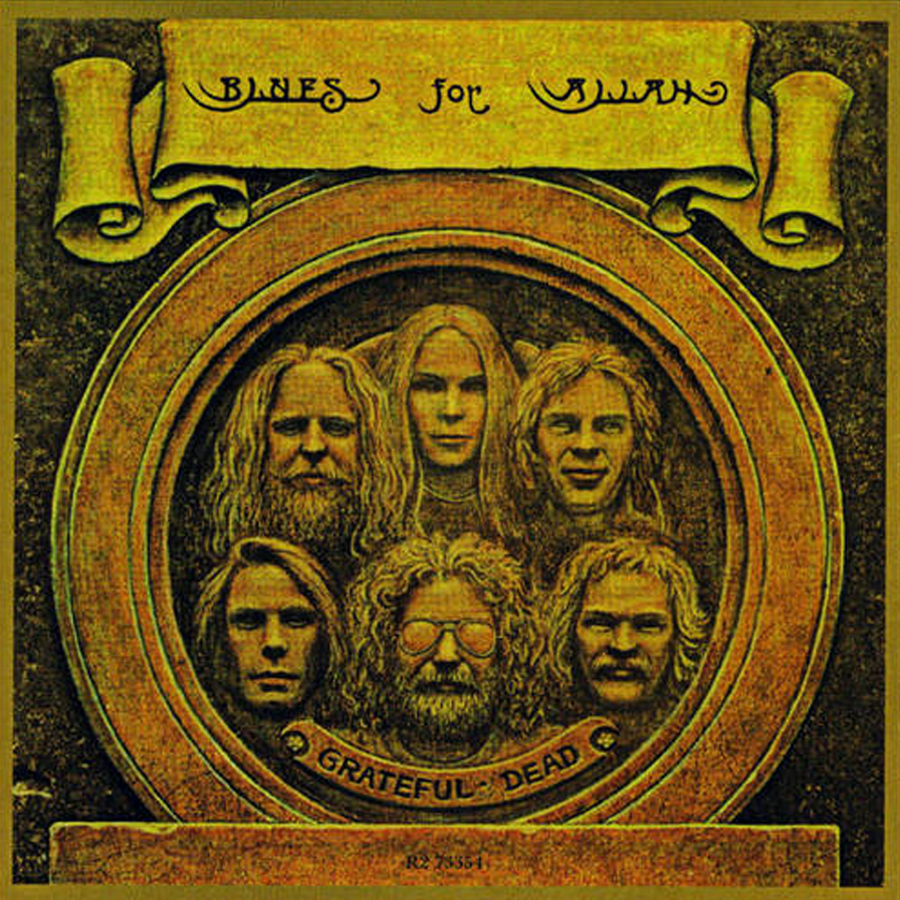
Forced Intimacy & New Frontiers: The Story of Blues for Allah

The Grateful Dead’s eighth studio album Blues For Allah would prove to be a transitional record for the band. With it, they entered a new phase, hinted at as far back as “Alligator” on 1968’s Anthem of the Sun but more fully explored with “Scarlet Begonias” on Mars Hotel. The album features a mix of 70s funk, hard-edged R&B, fusion jazz, world-beat rhythms and even a bit of the sound that came to define the decade, disco. This scattered musical buffet would characterize the sound on the band’s next two records, Terrapin Station and Shakedown Street.

“Anyone who thinks the Dead ‘went disco’ with Shakedown Street needs to take a closer listen to 1975’s Blues for Allah,” Tony Sclafani wrote in the Grateful Dead FAQS.

Blues for Allah also marked the return of prodigal drummer Mickey Hart who had left the band several years earlier after his father was arrested for stealing money from the group. His comeback would enable the band to push its sound palate beyond the basics of rock and country and meld together complex, polyrhythmic sounds that also blended elements of Caribbean and Latin music. Hart’s major contribution to the record, which is in nearly every history of the album, was his decision to bring crickets — not Buddy Holly’s backing band, but actual crickets — into the recording studio for the album’s extended title track.    

The album is one of the jammiest in their catalog, second only to Anthem of the Sun in terms of experimentation. It was recorded in Bob Weir’s home studio in early 1975, while the band was on a touring hiatus following a series of “farewell” shows in late 1974.   

The word “comfortable” comes up often in various histories of the band. “This forced intimacy (no isolation booths or baffles, there wasn’t room) really enhanced the process of developing the tunes,” Phil Lesh wrote in his memoir. “We had to play them like a band would onstage milking them for all the expressive content we could find.”  The home-like atmosphere of the sessions also allowed the band to loosen up, which you can hear loud and clear in the open-ended feel of the record. “For the first time, the Grateful Dead went into a studio with no material and no notion of the next gig, a creative tabla rosa that would be unique in their recording history,” historian and publicist Dennis McNally wrote. “They laughed, they got crazy, they thoroughly enjoyed themselves.” Describing the process Jerry Garcia said, “We’d go into the studio, we’d jam for a while, and then if something nice turned up we’d say ‘Well, let’s preserve this little hunk and work with it, see if we can’t do something with it’.”

Not everyone thought the atmosphere was conducive to recording: drummer Bill Kreutzmann described the scene as being “too relaxed” and “too comfortable” and thought the music suffered as a result, despite the plethora of strong material. “We should’ve let the new tunes breathe a bit more before we recorded them, because they really deserved better.”

With this album in particular the band pushed the boundaries of improvisation in number of directions, leading to some classic songs, and some that were less so.   

The album opens with the funky suite: “Help on the Way/Slipknot!/Franklin’s Tower.” With its slow-jam grooves I associate “Help …” with some of the harder-edged R&B songs of the era, like Marvin Gaye’s “Inner City Blues (Make Me Wanna Holler),” Bobby “Blue” Bland’s “Ain’t No Love in the Heart of the City” and Bobby Womack’s “Across 110th Street.” With its chorus “Help on the way/I know only this/I've got you today/Don't fly away/'Cause I love what I love/And I want it that way,” the song might be describing a relationship but seems to hint at something fraught with chaos.  

The suite shifts from “Help …” into “Slipknot!” an electric jazz instrumental jam, that would have been at home on some of the fusion jazz records of the era. The Dead had always flirted close to the edge of the fusion sound, especially with “Dark Star.” But the feel on this track is much funkier and looser, similar to tracks on the Mahavishnu Orchestra's The Inner Mounting Flame or Herbie Hancock’s Head Hunters. The trio of songs ends with the hippie sing-a-long “Franklin’s Tower” with its memorable chorus, “Roll away the dew.”  

The album continues on its fusion progression with another jazzy instrumental,“King Solomon’s Marbles.”  Following this it shifts more into disco with “The Music Never Stopped.” The song was written hastily during the final stages of the recording process. According to McNally, Weir called his lyricist and writing partner John Barlow and played some of the melodies over the phone. Barlow worked all day on his ranch and came up with the lyrics, which he relayed back to Weir in the evening. The song itself is a duet between Weir and Donna Godchaux and the first studio track where she does more than sing backup.  

After that comes “Crazy Fingers.” Though the song has a slow reggae vibe, it didn’t start out that way. Blair Jackson wrote, “Garcia said in his original setting the song was almost heavy metal, but by the time it reached the concert stage it had been transformed into a floating, lyrical, slow reggae tune that perfectly matched the feeling of the words.” The song sounds more like some of Jerry’s solo material, at the time the Jerry Garcia Band was performing a number of reggae covers in its live shows.

Though the album was recorded a whole two years before Fonzie made his proverbial water ski jump over a caged shark on Happy Days, Blues for Allah jumps a shark of its own after “Crazy Fingers.” When the album lands on the instrumental track “Sage and Spirit,” it sounds like it would be at home on any album of classical recordings. But that song feels like a down-home classic compared to the album’s truly weird title track, “Blues for Allah.” The 12-minute piece features extensive chanting, long meandering jams, and yes, Mickey Hart’s crickets. Garcia couldn’t really describe what was going on in the song. “That song was another totally experimental thing that I tried to do,” he said. “In terms of the melody and the phrasing and all, it was not of this world. It’s not in any key and it’s not in any time. And the line lengths are all different.”  

At its best moments, the song serves as a prelude to the band’s extended “Space” jams in the 1980s and 90s. At its worst, with the chanting, well, historian David Browne summed it up best, saying the group sounded like “Marin County monks on an acid trip.” Personally, I think they sound a bit like these guys:

Even today, 41 years after the song was recorded it remains one of the most unlistenable in the band’s catalogue. The band only played it live a handful of times; sources vary as to how few: a mere 3, 5 or 6 times, depending on the Dead database.  

With the jammy, meandering quality of the early songs and the outright bizzarro nature of the final two tracks, the album as a whole feels very uneven. Reactions to it by band members, historians and critics have been mixed over the years. Upon its release, Rolling Stone gave the band some backhanded praise for the effort saying, “the Grateful Dead have begun to awaken from the artistic coma they've been in since 1971. … They've also abandoned their tired philosophical stetsons and Old West daydreams in search of new frontiers. And though, on the basis of this record, one can't be totally convinced that it's better late than never, still, it's a good try.”  

Jackson said, “If the record was lacking anything it was warmth and confidence that the band drew from playing the songs in front of people for awhile before recording them.” The only track to appear in a live show prior the band starting the recording process was “Slipknot!” Even that was only played once.

McNally blames the end result on the final push to bring the album out. Desperate for cash to support their fledgling label the band had signed a deal with United Artists to help with distribution. He notes that after several months of jamming in the studio the band was given a tight deadline for the final product. “As usual, the Dead managed to shoot themselves in the foot. They’d put together a wonderful set of material under ideal and relaxed circumstances.” But once the deadline came on, “They slammed through the final recording process in two or three weeks.”    

Kreutzmann  — who in his memoir is mostly derisive regarding the albums and the recording process in general  —  concedes that the music on the record is really good, “To this day, I still really love some of those songs.” But with an interesting addendum. The album itself was released on September 1, 1975. A few weeks before on August 13, the band played an invitation-only concert at the Great American Music Hall in San Francisco, where they performed every track from the album (though not in order). “Maybe the live run-through of the album should’ve been the album itself,” he wrote.

The band ultimately did release a live recording of the show in 1991 under the name One from the Vault. Listening to the albums side by side, it’s clear Kreutzmann is right. Even the best moments on the studio tracks play out much better in a live setting than in the studio, with more energy. The title track itself even fares a bit better, especially with the live crickets, who come through loud and clear on the concert recording. In the end, the chanting still dooms the song. Some things are better off left in the past.  

Blues for Allah marked the end of another era for the band. It would be the last studio album they would put out on their own label. Shortly thereafter they would sign on with Clive Davis’ newly created Arista Records. Still, the band’s sonic direction had been firmly established and with a new label they would attain some brilliant heights and frustrating lows.  

Sources
Browne, David. So Many Roads: The Life and Times of the Grateful Dead. Da Capo Press, Boston, MA. 2015  
Jackson, Blair. Garcia: An American Life. Reissue. Penguin Books. 2000
Kreutzmann, Bill and Eisen, Benjy. Deal: My Three Decades of Drumming, Dreams and Drugs with the Grateful Dead. St. Martin’s Press, New York. 2015.
Lesh, Phil. Searching for the Sound: My Life with the Grateful Dead. Little, Brown and Company, New York. 2005.
Sclafani, Tony. The Grateful Dead FAQ: All That’s Left To Know About The Greatest Jam Band In History. Backbeat Books, Milwaukee, WI. 2013.   
Trager, Oliver. The American Book of the Dead: The Definitive Grateful Dead Encyclopedia. Fireside, New York. 1997.
McNally, Dennis. A Long Strange Trip: The Inside History of the Grateful Dead. Broadway Books, New York. 2002.

Sunday, September 4, 2016

Apparently, I’m Still Alive: Pearl Jam’s Ten at 25

Glenn Frey repeatedly said about the Eagles that people didn’t just listen to the band’s music, they did things to it. I imagine the same is true for those who came of age listening to Pearl Jam. They got drunk, hooked up, broke up, woke up hungover and drove off in a huff with their middle finger extended, screaming “I’m still alive” at the top of their lungs.  

I did none of those things. Despite having just turned 14 when the group’s debut album Ten came out in August 1991, I missed grunge entirely. I never even listened to Nirvana’s Nevermind until a few years ago. It’s a fact that even I’ve found odd over the years given that I like a lot of the genre’s influences like Black Sabbath, Aerosmith, the Ramones and the Beatles, “Helter Skelter,” which I consider to be the first grunge song. In the summer of 1991, I saw Ziggy Marley and the Melody Makers in concert, so my musical tastes were clearly somewhere else. By the time I rediscovered contemporary radio in 1997, the landscape had changed with ska, pop punk and the Spice Girls dominating the airwaves.  

So when I saw the articles —  and various Facebook posts about the articles —  saying that Ten had turned 25, I felt it was time to finally give it a listen. I’m usually about 20-30 years behind most musical trends, so the timing seemed right.

I’m not totally unfamiliar with Pearl Jam’s music. I obviously know some of their hits, like “Alive,” and I really like their covers of the early 1960s tune “Last Kiss” and the Who’s “Love Reign O’er Me.” They also appeared as members of one of my all-time favorite fake bands, Citizen Dick, in the movie “Singles.” (Again, I liked the movie but didn’t really listen to the soundtrack.) I once interviewed the singer of a group with the hopefully upbeat name Lollipop Lust Kill who called himself Evvy Pedder. I even saw Eddie Vedder perform Bob Dylan’s “The Times They Are A Changin’ ” at a Ralph Nader political rally at Madison Square Garden in 2000, because we all do dumb things when we’re young.

The first track on Ten, fittingly called “Once,” sounded exactly like I expected it would.  The band’s signature sound, i.e. piercing guitars, hard clubbing drums, and Vedder’s fast-paced stuttering staccato, are all there on track one. They rarely stray from the formula on the rest of the record.  

As the album progressed, I realized I knew a few more tunes than I thought. While I was listening, I could see why so many people probably connected with the band. They write great hooks. By the time most of the songs got to the final chorus I felt as though I could sing along, even though I could barely decipher any of the lyrics. A few hours later I even found myself humming “Even Flow.”   

A few tracks stuck out, mainly because they differed slightly from the rest. Most notable to me were “Black,” a power ballad with a piano-driven buildup to the guitar solo in the final stretch, and “Why Go,” with its slightly funky intro.    

The songs on the first half of the album sounded much better than the second half. The dividing line between the good and the somewhat decent tracks was the song “Jeremy,” a tune that I’ve heard many times, but still don’t really like. I feel like the band’s teenage-aged, sad-boy lament led legions of rock n’ roll badasses in the 1990s to stop singing about partying and getting laid and focus on their feelings, resulting in what sounded like a lot of whining on the radio. Or to put it another way, it was the inspiration for every song Creed ever put out. A nearly unforgivable sin.  

Still, if the worst thing you can say about a band’s debut is that it inspired 100,000 bad imitators, that’s not too bad. While Pearl Jam has long since made the shift from cutting-edge musicians to middle-aged touring stalwarts, it is fair to say that they started out with a solid foundation with Ten. After listening to it a few times, I actually wanted to hear it again, and suddenly found myself thumbing through the band’s catalogue. Maybe in another 10-20 years I’ll get around to listening to it.     

Saturday, June 25, 2016

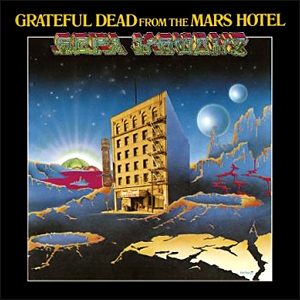
“The Bells of Heaven Ring”: The Grateful Dead storms the Mars Hotel

It seems fitting that there is no consensus on what the Grateful Dead’s seventh album is officially called. In some places it’s listed as Grateful Dead From the Mars Hotel, in others it’s From the Mars Hotel and often it’s cited as simply Mars Hotel. The record — named after the San Francisco dive that Jack Kerouac mentioned in his novel Big Sur  — is awash in contradictions.  


The album contains eight of the slickest, tightest studio recordings in the band’s catalogue.  Yet, unlike its predecessor Wake of the Flood, which has a consistent, well-put-together feel, Mars Hotel is all over the place musically, making it difficult to listen to straight through. Even playing it on shuffle doesn’t throw off the rhythm of the album, because there isn’t one.  

Mars Hotel was recorded at CBS Studios in San Francisco between March and April 1974 at a time when the city was in the midst of a crime wave that came to be known as the “Zebra” murders, a series of racially-motivated killings that had gone on for over a year. Drummer Bill Kreutzmann describes the scene in his memoir: “People were terrified to walk the streets at night. The [San Francisco Police Department] launched an unprecedented dragnet, as they racially profiled more than 500 ‘suspects’. I remember hearing sirens constantly wailing in the distance, as I’d cross the Golden Gate Bridge heading downtown to work.”  

The group spent about a month rehearsing the songs before entering the studio and took a serious approach to recording. In So Many Roads, David Browne describes the sessions, “The loose knit atmosphere of the Sausalito sessions for Wake of the Flood was out, replaced with a more professional undertaking that began with an in-house engineer, Roy Segal, who had worked with fastidious record makers like Paul Simon and Art Garfunkel.” Segal’s long list of studio credits as a producer and engineer also includes Janis Joplin, Sly and the Family Stone, Johnny Winter and Billy Cobham, among many others.    

As usual, band members were divided over the outcome. Jerry Garcia called it, “an excellent studio album,” but with the caveat, “the aesthetics of making a good studio album is that you don’t hear any mistakes. And when we make a record that doesn’t have any mistakes on it, it sounds fucking boring.” Phil Lesh barely mentions the album in his memoir, despite the fact that it contains one of his signature songs, “Unbroken Chain.” Kreutzmann said in his autobiography that he doesn’t even own a copy of the album, but concedes that it “turned out alright.”

The album opens with the hard-rockin’, Chuck Berry-esque “U.S. Blues.” Much has been written about Berry’s influence on the band, as they regularly played a number of his songs throughout their run, including “Johnny B. Goode,” “Around and Around” and “Promised Land.” Berry even opened for the Dead in 1967.

Like many of Berry’s songs, such as “Sweet Little Sixteen” and “Back in the U.S.A.,” “U.S. Blues” contains a pastiche of images and artifacts from American culture, tinged with a bit of irony.

I'm Uncle Sam, that's who I am; Been hidin' out in a rock and roll band.
Shake the hand that shook the hand of P.T. Barnum and Charlie Chan

The lyrics are tied together with the hook-laden chorus and Berry-style guitar solo.    

Wave that flag, wave it wide and high.
Summertime done, come and gone, my, oh, my.

Whenever I hear it, I can’t help but think that some Republican politician will use it at one of their campaign rallies only to receive a strongly worded cease-and-desist order from the band’s management the next day. To that end, in The Grateful Dead FAQ, Tony Sclafani compared the song to Bruce Springsteen’s 1984 hit, “Born in the U.S.A.”  “It’s a protest song that can also be interpreted as a celebration of the country because of a rousing chorus.”  

The album shifts completely on the second track to the softer, harpsichord-driven “China Doll.”  Robert Hunter wrote the lyrics after a friend’s attempted suicide, and originally dubbed it “The Suicide Song,” thus explaining the dark, haunting opening passage: “ A pistol shot at 5 o'clock/The bells of heaven ring.” Underneath the harpsichord and vocals, you can hear a searing guitar solo. The song is a jarring listen after the album’s upbeat, fast-paced opener.   

The third track “Unbroken Chain” is one of the most interesting and unusual in the Dead’s catalogue. The song feels like a pocket symphony, with a number of different sections and movements. Sclafani called it “a feast for the ears, with swooshing synthesizer effects and a complicated mid-song jazz break.”

Written by Lesh, who had singing duties, with lyrics by Bobby Peterson, it differs in sound from much of the Dead’s material. I would often include it on mix tapes (back when I made such things) and would inevitably be asked the question: “is this a Dead tune?”

The lyrics touch on the big topics: religion, love, death, forgiveness, even football (“drop you for a loss”). The words “unbroken chain” are the connective glue that holds the song together. They are first sung in the opening line, with Donna Godchaux calling out, “Blue light rain,” to which Lesh replies, “Whoa, unbroken chain.” The phrase appears again later in the track after an extended, multi-directional jam, which Lesh ends by singing the words, “Lilac rain, unbroken chain.” The song then ends with the series:

Unbroken chain of sorrow and pearls
Unbroken chain of sky and sea
Unbroken chain of the western wind
Unbroken chain of you and me

Lesh seems to have a complicated relationship with the song. He is quoted in the American Book of the Dead, saying, “I gave up songwriting after Mars Hotel, because the results were disappointing. “Unbroken Chain’ could have been really something. Some people think it really is, but I wanted it to be what I wanted it to be.”

Yet, he would later call his autobiography Searching For the Sound after a passage from the lyrics, and in it he would call the song his “best.”  It would remain unplayed in concert until 1995, when the band finally performed it 10 times, including during their final show at Soldier’s Field. Lesh credits his son Grahame for urging him to introduce it into the repertoire. “Grahame, after listening to the record version, was so enthusiastic about hearing it performed that I just couldn’t refuse — and lo and behold it came off so well that I was encouraged to continue slotting it into our sets.”

Hearing the crowd’s response when the group first performed the song at the Spectrum in Philadelphia on March 19, 1995, you can tell that most fans agreed with Lesh’s son. Garcia’s biographer and band historian Blair Jackson, called the song’s reintroduction a highlight of the group’s final year on tour. “It was ecstatically greeted each time, particularly by older Deadheads who’d worn out copies of the Mars Hotel album in the era before Dead bootleg tapes became widely available, when records were still the main medium for listening to the Dead.” The fact that they could take the song out of purgatory twenty years after its original recording and receive this kind of response speaks volumes about the strength of the original recording.   

Lesh and Peterson had one other track on the album, the countrified “Pride of Cucamonga.” The song, also sung by Lesh, sounds like a lost track from the American Beauty/Workingman’s Dead era, and one can easily picture it being sung by Merle Haggard and/or George Jones.

The most interesting moment in the song occurs just before the bridge. For a second, it feels as though the band is going to speed the track up and take it into blues-rock territory. Then they pull back, and the song shifts into a pedal steel solo by John McPhee (Garcia is sometimes given credit). “Pride of Cucamonga” was never played live during the band’s original run but was included on Phil Lesh & Friends’ 2006 album Live at the Warfield. In that version, guitarists John Scofield and Larry Campbell take the interlude to its logical and most Dead-like conclusion with an extended jam.


If Mars Hotel’s opening track is an homage to the band’s rock and roll roots, then the fifth song, “Scarlet Begonias,” provides a preview of the Grateful Dead’s new direction on its subsequent albums. The song’s high-pitched keyboards and multi-layered, world-beat inspired funk came to define much of the band’s sound through the late 1970s. During the band’s legendary show at Cornell’s Barton Hall in 1977, they paired it with “Fire on the Mountain,” which would appear on Shakedown Street. The songs work well together because they’re nearly identical.  


Just as the lyrics to “U.S. Blues” contain American imagery, “Scarlet Begonias” makes a number of references to Merry Ole England. Most notably there’s opening line, “As I was walking round Grosvenor Square,” which refers to a place in Mayfair. The song was based on a love affair lyricist Hunter had on the other side of the pond.

Of all the songs on the album, the second to last track, “Money, Money,” written by Bob Weir with lyrics by John Barlow is the least popular. It seems to be universally hated by fans, critics and band historians, primarily for its “sexist lyrics.” For example:

Lord made a lady out of Adam's rib,
Next thing you know, you got women's lib.
Lovely to look upon, Heaven to touch;
It's a real shame that they got to cost so much.

So the song is clearly no “Sugar Magnolia” or “Scarlet Begonias” in terms of romantic sentiment. But whenever I read these critiques I always think it odd that people dislike the song for being sexist. The band has plenty of songs in its catalogue that aren’t exactly P.C. towards members of the opposite sex. Fans, critics, et al., are also much more forgiving of track four, “Loose Lucy” where, to my knowledge, no such backlash exists despite the opening lines: ”Loose Lucy is my delight, she come runnin' and we ball all night.”

I believe the song has earned such a backlash because it’s the worst track on an otherwise solid album. Also, before CDs, fans had to endure it to get from “Pride of Cucamonga” to the album’s closer “Ship of Fools,” so they were stuck with it one way or another. I feel like that’s a good parable for the album itself. The band might not have not necessarily been happy with the outcome, but given its quality and the number of great songs, they had to account for its existence and popularity over time.  

After all the different musical directions the Grateful Dead explores on Mars Hotel, the album’s final turn is a quiet one. It ends with the mournful ballad “Ship of Fools.” Many of the band’s chroniclers have labeled it as an allegory about the political climate in the U.S. surrounding the decline and fall of President Richard Nixon. Some push it even further, labeling it a parable for the state of the Grateful Dead itself as the band was nearing exhaustion and would take a break from the road soon after. Hunter’s lyrics are intentionally vague, forcing listeners to draw their own conclusions. The song ends with a sad, requiem-like guitar solo, which like many Grateful Dead studio tracks fades out a bit too soon. As unsettling as the album’s twists and turns can be, in the end, it still leaves you longing for a bit more.   


Sources
Browne, David. So Many Roads: The Life and Times of the Grateful Dead. Da Capo Press, Boston MA. 2015  
Dodd, David. The Complete Annotated Grateful Dead Lyrics: Fiftieth Anniversary Edition. Simon & Schuster. 2015
Kreutzmann, Bill and Eisen, Benjy. Deal: My Three Decades of Drumming, Dreams and Drugs with the Grateful Dead. St. Martin’s Press, New York. 2015.
Lesh, Phil. Searching for the Sound: My Life with the Grateful Dead. Little, Brown and Company, New York. 2005.
Richardson, Peter. No Simple Highway: A Cultural History of the Grateful Dead. St. Martin’s Press, New York. 2015
Sclafani, Tony. The Grateful Dead FAQ: All That’s Left To Know About The Greatest Jam Band In History. Backbeat Books, Milwaukee, WI. 2013.   
Trager, Oliver. The American Book of the Dead: The Definitive Grateful Dead Encyclopedia. Fireside, New York. 1997.
McNally, Dennis. A Long Strange Trip: The Inside History of the Grateful Dead. Broadway Books, New York. 2002.